




A 1.65-second 10-yard dash means different things depending on who is running it. For a coach using a laser timing system, having the right context for that number is what makes testing useful. For an average high school athlete with no speed-specific training, 1.65 is a solid result. For a high school running back trying to get recruited, it is about middle of the pack. For a D1 wide receiver, it is a number to work on. Good benchmark data exists across most sports, but it tends to live in football-specific databases, cover males only, or stop at the collegiate level without breaking down by sport or position. This post covers both genders across the major team sports, from middle school through professional.
A note on these numbers: The benchmarks here draw from peer-reviewed literature, combine databases, and established coaching guidelines. Where direct sport-specific data exists, we used it. Where it is limited, particularly for women's sports and younger age groups outside of football, figures are extrapolated from published norms, sex-based sprint performance research, and age-adjusted development curves. 10-meter sprint times (common in European soccer and track literature) are converted to 10-yard equivalents using a factor of 0.91, since 10 meters is slightly longer than 10 yards. All numbers are reference ranges, not absolute targets. Sports with the widest positional variation will be broken down by position in future posts.
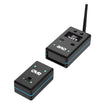
A note on timing method: These benchmarks assume fully automated timing with laser gates. Hand-timed results are typically 0.10 to 0.15 seconds faster due to reaction-time differences in how the clock is started. A hand-timed 1.55 is not the same as a laser-timed 1.55. OVR Sprint uses infrared timing accurate to 0.001 seconds, which aligns with the automated-timing standard used in the data below.
Where the Average Athlete Actually Stands
The tables below cover the full range from average to elite, for both males and females, from middle school through professional. Start here before going sport-specific.
Males
| Stage | Average | Good | Advanced | Elite |
|---|---|---|---|---|
| Middle School (12–14) | 1.95–2.15 s | 1.82–1.94 s | 1.72–1.81 s | Sub-1.72 s |
| High School (14–18) | 1.70–1.85 s | 1.60–1.69 s | 1.53–1.59 s | Sub-1.53 s |
| College (18–22) | 1.63–1.76 s | 1.54–1.62 s | 1.48–1.53 s | Sub-1.48 s |
| Professional (22–32) | 1.58–1.70 s | 1.50–1.57 s | 1.45–1.49 s | Sub-1.45 s |
Females
| Stage | Average | Good | Advanced | Elite |
|---|---|---|---|---|
| Middle School (12–14) | 2.12–2.34 s | 1.99–2.11 s | 1.88–1.98 s | Sub-1.88 s |
| High School (14–18) | 1.88–2.06 s | 1.77–1.87 s | 1.68–1.76 s | Sub-1.68 s |
| College (18–22) | 1.79–1.95 s | 1.68–1.78 s | 1.60–1.67 s | Sub-1.60 s |
| Professional (22–32) | 1.72–1.87 s | 1.62–1.71 s | 1.55–1.61 s | Sub-1.55 s |
Times assume a standing start with a short lead-in measured with electronic timing gates, positioned close enough to the beam that forward momentum is minimized before the clock starts. Any athlete in a serious strength and power development program in conjunction with their speed training for more than a year should expect to sit at "good" or above for their age group. Elite represents the top few percent of competitive athletes at each level.
Sport-by-Sport 10-Yard Dash Benchmarks
Football
No sport produces more detailed acceleration data than football. The NFL Combine has collected 10-yard split times for decades, and high school football combine databases provide one of the few large-sample normative datasets available for youth athletes at this distance.
Football
| Level | Average | Good | Advanced | Elite |
|---|---|---|---|---|
| Middle School | 1.95–2.20 s | 1.83–1.94 s | 1.73–1.82 s | Sub-1.73 s |
| High School | 1.73–1.93 s | 1.63–1.72 s | 1.57–1.62 s | Sub-1.57 s |
| College | 1.63–1.77 s | 1.57–1.62 s | 1.52–1.56 s | Sub-1.52 s |
| NFL | 1.57–1.70 s | 1.53–1.56 s | 1.47–1.51 s | Sub-1.47 s |
Position creates a wide spread within these ranges. Skill positions like wide receivers, running backs, and defensive backs typically run 0.10 to 0.20 seconds faster than linemen at the same level. The tables above represent the full team range and reflect true standing-start laser timing. The NFL Combine uses a 3-point hand-release start. Published research indicates this reads approximately 0.05 seconds faster at 10 yards than a laser-triggered standing start, so the figures above reflect a modest adjustment to align with the standing-start standard used throughout this post.
Soccer
First-step quickness defines soccer at every level, from pressing situations to explosive transitions and defensive recovery. Published normative data from European soccer literature, converted from 10-meter testing, anchors the figures below. Qualities that drive this number respond well to reactive strength training.
Men's Soccer
| Level | Average | Good | Advanced | Elite |
|---|---|---|---|---|
| Middle School | 1.95–2.15 s | 1.85–1.94 s | 1.77–1.84 s | Sub-1.77 s |
| High School / Club | 1.75–1.90 s | 1.67–1.74 s | 1.60–1.66 s | Sub-1.60 s |
| College / Professional | 1.58–1.72 s | 1.52–1.57 s | 1.49–1.53 s | Sub-1.49 s |
Women's Soccer
| Level | Average | Good | Advanced | Elite |
|---|---|---|---|---|
| Middle School | 2.05–2.25 s | 1.95–2.04 s | 1.87–1.94 s | Sub-1.87 s |
| High School / Club | 1.85–2.00 s | 1.77–1.84 s | 1.70–1.76 s | Sub-1.70 s |
| College / Professional | 1.72–1.85 s | 1.65–1.71 s | 1.58–1.64 s | Sub-1.58 s |
Forwards and wide midfielders tend to test at the faster end of any given level. Center backs and goalkeepers typically test a few tenths slower within the same team.
Basketball
First-step quickness is one of the most valued physical qualities in basketball at every level. A 2022 systematic review of fitness testing across professional, collegiate, and youth programs confirms 10m sprint testing as a standard assessment throughout the sport.
Men's Basketball
| Level | Average | Good | Advanced | Elite |
|---|---|---|---|---|
| Middle School | 1.95–2.15 s | 1.85–1.94 s | 1.77–1.84 s | Sub-1.77 s |
| High School | 1.82–1.97 s | 1.73–1.81 s | 1.66–1.72 s | Sub-1.66 s |
| College | 1.73–1.85 s | 1.64–1.72 s | 1.58–1.63 s | Sub-1.58 s |
| Professional | 1.68–1.80 s | 1.60–1.67 s | 1.53–1.59 s | Sub-1.53 s |
Women's Basketball
| Level | Average | Good | Advanced | Elite |
|---|---|---|---|---|
| Middle School | 2.05–2.25 s | 1.95–2.04 s | 1.87–1.94 s | Sub-1.87 s |
| High School | 1.96–2.12 s | 1.87–1.95 s | 1.79–1.86 s | Sub-1.79 s |
| College | 1.87–2.00 s | 1.77–1.86 s | 1.71–1.76 s | Sub-1.71 s |
| Professional | 1.80–1.93 s | 1.71–1.79 s | 1.64–1.70 s | Sub-1.64 s |
Guards typically test faster than forwards and centers at the same level. The positional gap tends to be meaningful at every level and grows more pronounced as competition increases.
Track and Field
Sprinters and jumpers produce the fastest 10-yard times in track and field. The explosive hip extension and rate of force development that drives sprint speed is the same quality coaches build with depth jump training and other plyometric work.
Men's Track and Field
| Level | Average | Good | Advanced | Elite |
|---|---|---|---|---|
| Middle School | 1.85–2.05 s | 1.77–1.84 s | 1.70–1.76 s | Sub-1.70 s |
| High School | 1.65–1.80 s | 1.58–1.64 s | 1.52–1.57 s | Sub-1.52 s |
| College | 1.55–1.67 s | 1.50–1.54 s | 1.45–1.49 s | Sub-1.45 s |
| Elite / Olympic | 1.58–1.68 s | 1.52–1.57 s | 1.46–1.50 s | Sub-1.45 s |
Women's Track and Field
| Level | Average | Good | Advanced | Elite |
|---|---|---|---|---|
| Middle School | 1.98–2.18 s | 1.88–1.97 s | 1.80–1.87 s | Sub-1.80 s |
| High School | 1.80–1.95 s | 1.72–1.79 s | 1.65–1.71 s | Sub-1.65 s |
| College | 1.68–1.80 s | 1.62–1.67 s | 1.56–1.61 s | Sub-1.56 s |
| Elite / Olympic | 1.72–1.83 s | 1.65–1.71 s | 1.58–1.64 s | Sub-1.55 s |
These numbers reflect sprinters and jumpers specifically. Distance runners will typically test well below them. The elite and Olympic row represents the upper boundary of what human standing-start acceleration can produce, occupied by athletes who have devoted their careers specifically to explosive sprint development.
Baseball and Softball
Baseball acceleration over 10 yards maps directly to bat-to-first-base quickness and outfield first steps. Of all the sports in this post, the positional speed spread in baseball is the widest. Statcast data shows center fielders and middle infielders averaging significantly faster than catchers, corner infielders, and designated hitters. The ranges below reflect the full roster.
Baseball
| Level | Average | Good | Advanced | Elite |
|---|---|---|---|---|
| Middle School | 1.95–2.15 s | 1.85–1.94 s | 1.77–1.84 s | Sub-1.77 s |
| High School | 1.70–1.85 s | 1.62–1.69 s | 1.55–1.61 s | Sub-1.55 s |
| College | 1.65–1.78 s | 1.57–1.64 s | 1.52–1.56 s | Sub-1.52 s |
| Professional | 1.62–1.78 s | 1.55–1.61 s | 1.50–1.54 s | Sub-1.50 s |
Softball
| Level | Average | Good | Advanced | Elite |
|---|---|---|---|---|
| Middle School | 2.05–2.25 s | 1.95–2.04 s | 1.87–1.94 s | Sub-1.87 s |
| High School | 1.85–2.00 s | 1.77–1.84 s | 1.70–1.76 s | Sub-1.70 s |
| College | 1.78–1.92 s | 1.70–1.77 s | 1.63–1.69 s | Sub-1.63 s |
| Professional | 1.73–1.88 s | 1.65–1.72 s | 1.58–1.64 s | Sub-1.58 s |
Outfielders and middle infielders will consistently test at the faster end of any given range. For elite professional outfielders, times approaching or below 1.50 seconds are realistic. Catchers, corner infielders, and designated hitters typically test well toward the slower end and often below the stated average. A team-wide average reflects all positions combined.
Rugby
Rugby has solid published 10-meter sprint normative data across age grades and competition levels. Research documents clear differences between backs and forwards, with meaningful progression from youth through senior competition.
Men's Rugby
| Level | Average | Good | Advanced | Elite |
|---|---|---|---|---|
| Middle School / U14 | 2.05–2.25 s | 1.95–2.04 s | 1.87–1.94 s | Sub-1.87 s |
| High School / U16–U18 | 1.88–2.05 s | 1.78–1.87 s | 1.70–1.77 s | Sub-1.70 s |
| College / Club | 1.75–1.90 s | 1.65–1.74 s | 1.58–1.64 s | Sub-1.58 s |
| Professional | 1.65–1.80 s | 1.57–1.64 s | 1.52–1.56 s | Sub-1.52 s |
Women's Rugby
| Level | Average | Good | Advanced | Elite |
|---|---|---|---|---|
| Middle School / U14 | 2.15–2.35 s | 2.03–2.14 s | 1.93–2.02 s | Sub-1.93 s |
| High School / U16–U18 | 1.98–2.15 s | 1.88–1.97 s | 1.80–1.87 s | Sub-1.80 s |
| College / Club | 1.85–2.00 s | 1.75–1.84 s | 1.67–1.74 s | Sub-1.67 s |
| Professional | 1.75–1.90 s | 1.65–1.74 s | 1.58–1.64 s | Sub-1.58 s |
Backs tend to run 0.10 to 0.20 seconds faster than forwards at the same level. The ranges above reflect the full squad. Research consistently shows 10m sprint times are practically equivalent between backs and forwards in youth rugby, with the gap growing more meaningful at senior and professional levels.
Volleyball
Volleyball has well-documented 10m sprint testing across multiple peer-reviewed studies covering male and female players from youth through elite competition.
Men's Volleyball
| Level | Average | Good | Advanced | Elite |
|---|---|---|---|---|
| Middle School | 2.00–2.20 s | 1.90–1.99 s | 1.82–1.89 s | Sub-1.82 s |
| High School / Club | 1.80–1.95 s | 1.72–1.79 s | 1.65–1.71 s | Sub-1.65 s |
| College | 1.70–1.83 s | 1.62–1.69 s | 1.57–1.61 s | Sub-1.57 s |
| Professional | 1.62–1.75 s | 1.55–1.61 s | 1.50–1.54 s | Sub-1.50 s |
Women's Volleyball
| Level | Average | Good | Advanced | Elite |
|---|---|---|---|---|
| Middle School | 2.10–2.30 s | 2.00–2.09 s | 1.90–1.99 s | Sub-1.90 s |
| High School / Club | 1.90–2.05 s | 1.80–1.89 s | 1.73–1.79 s | Sub-1.73 s |
| College | 1.80–1.93 s | 1.72–1.79 s | 1.65–1.71 s | Sub-1.65 s |
| Professional | 1.72–1.85 s | 1.63–1.71 s | 1.57–1.62 s | Sub-1.57 s |
Outside hitters and liberos tend to test at the faster end of any given range. Middle blockers typically test slightly slower, as their position places greater emphasis on vertical power than linear speed.
Lacrosse
Peer-reviewed research on lacrosse sprint performance, including directly measured times at 10 yards using infrared timing gates, informs the tables below. Men's lacrosse data at this distance is limited but aligns closely with soccer and baseball norms.
Men's Lacrosse
| Level | Average | Good | Advanced | Elite |
|---|---|---|---|---|
| Middle School | 1.98–2.18 s | 1.87–1.97 s | 1.78–1.86 s | Sub-1.78 s |
| High School | 1.75–1.90 s | 1.65–1.74 s | 1.58–1.64 s | Sub-1.58 s |
| College | 1.65–1.78 s | 1.57–1.64 s | 1.52–1.56 s | Sub-1.52 s |
| Professional | 1.63–1.75 s | 1.55–1.62 s | 1.50–1.54 s | Sub-1.50 s |
Women's Lacrosse
| Level | Average | Good | Advanced | Elite |
|---|---|---|---|---|
| Middle School | 2.08–2.28 s | 1.97–2.07 s | 1.88–1.96 s | Sub-1.88 s |
| High School | 1.88–2.03 s | 1.77–1.87 s | 1.68–1.76 s | Sub-1.68 s |
| College | 1.75–1.90 s | 1.65–1.74 s | 1.58–1.64 s | Sub-1.58 s |
| Professional | 1.70–1.83 s | 1.62–1.69 s | 1.57–1.61 s | Sub-1.57 s |
Positional differences in lacrosse are less pronounced than in football or rugby. Attack and midfield players tend to test at the faster end of any given range.
Tennis
Short-distance acceleration is central to tennis performance, with most in-point movements covering less than 5 meters. Published normative data from national federation testing programs and peer-reviewed research across competitive levels inform the figures below.
Men's Tennis
| Level | Average | Good | Advanced | Elite |
|---|---|---|---|---|
| Middle School / U12–U14 | 1.95–2.15 s | 1.85–1.94 s | 1.77–1.84 s | Sub-1.77 s |
| High School / U16–U18 | 1.75–1.90 s | 1.67–1.74 s | 1.60–1.66 s | Sub-1.60 s |
| College / ITF Junior | 1.65–1.78 s | 1.58–1.64 s | 1.52–1.57 s | Sub-1.52 s |
| Professional | 1.63–1.75 s | 1.55–1.62 s | 1.50–1.54 s | Sub-1.50 s |
Women's Tennis
| Level | Average | Good | Advanced | Elite |
|---|---|---|---|---|
| Middle School / U12–U14 | 2.05–2.25 s | 1.95–2.04 s | 1.87–1.94 s | Sub-1.87 s |
| High School / U16–U18 | 1.87–2.02 s | 1.78–1.86 s | 1.71–1.77 s | Sub-1.71 s |
| College / ITF Junior | 1.77–1.90 s | 1.68–1.76 s | 1.62–1.67 s | Sub-1.62 s |
| Professional | 1.73–1.85 s | 1.65–1.72 s | 1.60–1.64 s | Sub-1.60 s |
Sprint times in tennis are heavily influenced by biological maturation, particularly through the U14 to U16 transition. Published data from the German Tennis Federation testing program shows meaningful improvement across age groups for both genders, with post-pubertal male players testing substantially faster than pre-pubertal peers at the same competitive level.
Understanding Your Numbers
Every timing system is built to measure something slightly different, and understanding that makes cross-program comparisons useful rather than confusing. The most common comparison issue is hand timing versus laser timing. At the NFL Combine, timing uses a hand start and electronic laser finish, which produces times that sit between fully hand-timed and fully automated results. Most high school coaches are hand-timing their athletes, which tends to run 0.10 to 0.15 seconds faster than automated laser times. That gap matters when comparing against the benchmarks in this post.
Surface also matters. Track times are faster than grass times, which are faster than turf times in most cases. Body weight and body size are relevant too, particularly in football, where a 300-pound lineman running 1.65 is a different story than a 175-pound wide receiver running the same time.
If your athletes have been tested in other environments with different methods, a brief explanation before they see their laser-timed results goes a long way. A different number does not mean the testing is wrong. It means the measurement is more precise. A consistent sprint start and testing protocol is what makes the data worth keeping over a season and makes comparisons meaningful.
What to Do With a Benchmark
The number only tells you something useful when it has context. A 1.68-second 10-yard dash means something different for a high school running back than it does for a high school offensive lineman, and something different again for a college soccer player. Before drawing conclusions from a result, find the reference point that actually matches the sport and position of the athlete being tested.
A benchmark is only as reliable as the protocol behind it. The 10-yard dash is sensitive enough to detect real changes in acceleration and explosive power across a training block. If conditions change between sessions, you lose the ability to compare results meaningfully. Starting position, surface, footwear, warm-up state, and timing system placement all influence the result. Those variables add up across a season. Locking in a consistent protocol from the start is what makes the data worth tracking.
Coaches who test regularly start to notice things the number alone does not show. The 10-yard dash responds to both fatigue and training adaptation, often before other metrics move. A drop mid-season is sometimes the first sign that an athlete is carrying too much load. A meaningful improvement after a dedicated acceleration and speed training block confirms the work transferred. Paired with jump performance data, it gives coaches a fuller picture of athletic readiness across a season.
References
- Haugen, T., & Buchheit, M. (2016). Sprint running performance monitoring: Methodological and practical considerations. Sports Medicine, 46(5), 641–656.
- Haugen, T., Tonnessen, E., & Seiler, S. (2012). The difference is in the start: Impact of timing and start procedure on sprint running performance. Journal of Strength and Conditioning Research, 26(2), 473–479.
- Wannouch, Y. J., et al. (2024). A comprehensive analysis of 10-yard sprint reliability in male and female youth athletes. Journal of Strength and Conditioning Research, 38(9), e477–e488.
- McClelland, E. L., & Weyand, P. G. (2022). Sex differences in human running performance: Smaller gaps at shorter distances? Journal of Applied Physiology, 133(4), 876–885.
- Tønnessen, E., et al. (2015). Performance development in adolescent track and field athletes according to age, sex and sport discipline. PLoS ONE, 10(6), e0129014.
- Haugen, T. A., Breitschädel, F., & Seiler, S. (2019). Sprint mechanical variables in elite athletes: Are force-velocity profiles sport specific or individual? PLOS ONE, 14(7), e0215551.
- OC Sports Performance. (2024). Standing start 40-yard dashes.
- MatAssessment. Speed testing: 10m sprint.
- McKay, B. D., et al. (2020). Normative reference values for high school-aged American football players: Proagility drill and 40-yard dash split times. Journal of Strength and Conditioning Research, 34(4), 1184–1187.
- Leutzinger, T. J., et al. (2018). Anthropometric and athletic performance combine test results among positions within grade levels of high school-aged American football players. Journal of Strength and Conditioning Research, 32(5), 1288–1296.
- Gillen, Z. M., et al. (2023). Percentile rankings and position differences for absolute and allometrically scaled performance measures from the NFL Scouting Combine. Journal of Strength and Conditioning Research.
- Nikolaidis, P. T., et al. (2016). Reference values for the sprint performance in male football players aged from 9 to 35 years. Biomedical Human Kinetics, 8(1), 103–112.
- Ruf, L., et al. (2024). Normative reference centiles for sprint performance in high-level youth soccer players. Pediatric Exercise Science, 36(4), 192–200.
- Monster Baseball. (2023). Acceleration in high school baseball: 10-yard sprint times by age.
- Zabaloy, S., et al. (2021). In-season assessment of sprint speed and sprint momentum in rugby players according to the age category and playing position. Journal of Human Kinetics, 77, 274–286.
- Cross, M. R., et al. (2015). Mechanical properties of sprinting in elite rugby union and rugby league athletes. International Journal of Sports Physiology and Performance, 10(6), 695–702.
- Argus, C. K., et al. (2012). Characterization of the differences in strength and power between different levels of competition in rugby union athletes. Journal of Strength and Conditioning Research, 26(10), 2698–2704.
- Brown, T. D., et al. (2004). Identification of a theoretical model for a 40-yard sprint in Division I female soccer and lacrosse players. Journal of Sports Science and Medicine, 3(4), 203–210.
- Stojanović, E., et al. (2022). A systematic review on fitness testing in adult male basketball players: Tests adopted, characteristics reported and recommendations for practice. Sports Medicine, 52(7), 1491–1525.
- Lockie, R. G., et al. (2020). Lower-body power, linear speed, and change-of-direction speed in Division I collegiate women's volleyball players. Journal of Human Kinetics, 75, 223–233.
- Trajković, N., et al. (2020). Characterization of physical performance and change of direction deficit across age groups in young female volleyball players. Biology of Sport, 37(4), 345–352.
- Ulbricht, A., Fernandez-Fernandez, J., Mendez-Villanueva, A., & Ferrauti, A. (2016). Impact of fitness characteristics on tennis performance in elite junior tennis players. Journal of Strength and Conditioning Research, 30(4), 989–998.
- Fett, J., Ulbricht, A., & Ferrauti, A. (2020). Impact of physical performance and anthropometric characteristics on serve velocity in elite junior tennis players. Journal of Strength and Conditioning Research, 34(1), 192–202.
- Siener, M., et al. (2024). Physical performance tests in 8,008 competitive youth tennis players: A systematic review and meta-analysis of normative values. Sports Medicine.


Leave a comment
This site is protected by hCaptcha and the hCaptcha Privacy Policy and Terms of Service apply.